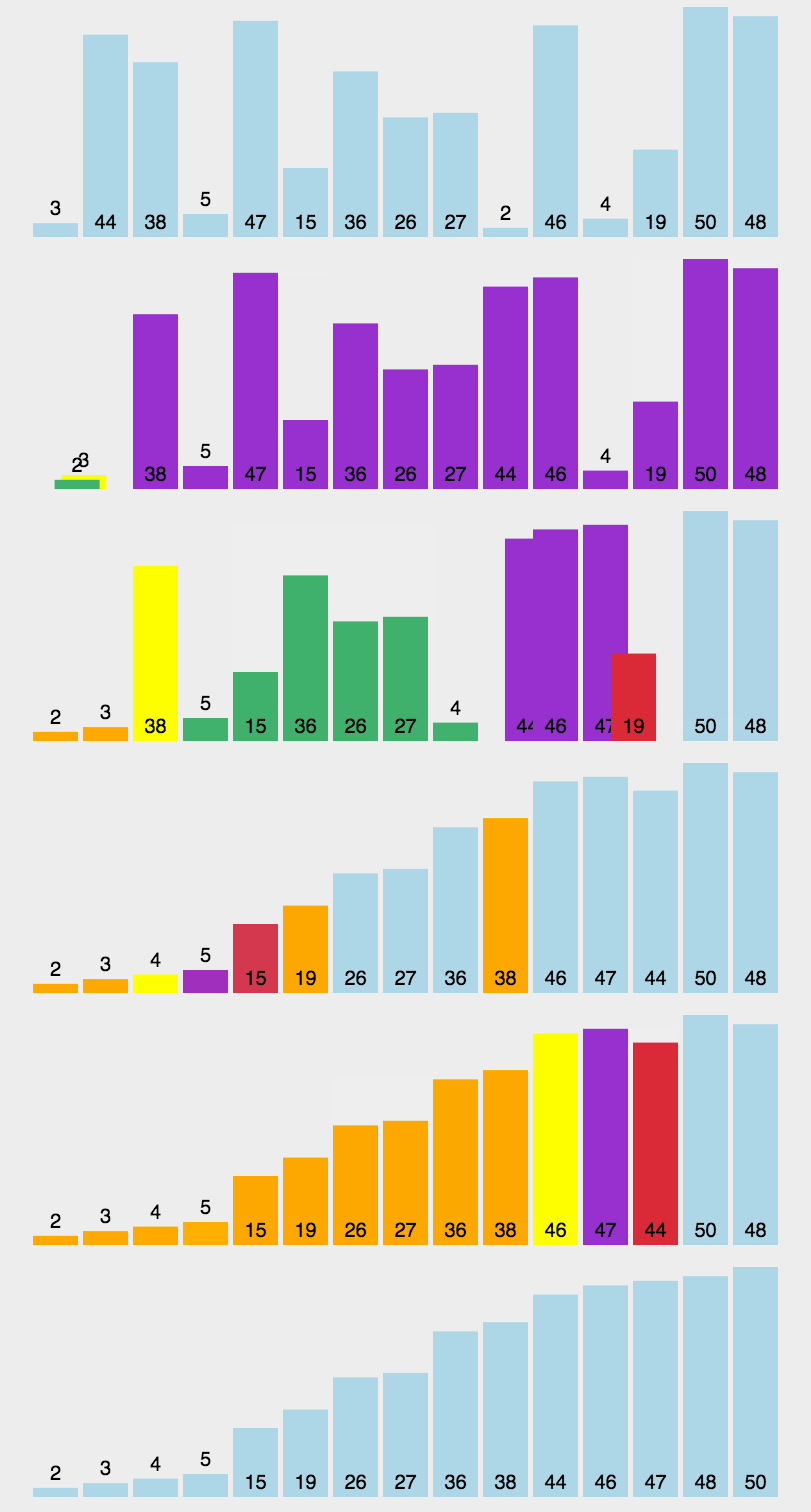
算法
数据结构
基础数据结构
背包
/**
 * 背包
 */
public class Bag<Item> implements Iterable<Item> {

    private Node first;

    private int N; // 维护背包中元素的数量

    private class Node {
        Item item;
        Node next;
    }

    /**
     * 添加元素到背包头部
     * @param item 要添加的元素
     */
    public void add(Item item) {
        Node oldfirst = first;
        first = new Node();
        first.item = item;
        first.next = oldfirst;
        N++; // 元素数量加一
    }

    /**
     * 删除背包头部的元素
     * @return 被删除的元素
     * @throws NoSuchElementException 如果背包为空
     */
    public Item remove() throws NoSuchElementException {
        if (isEmpty()) {
            throw new NoSuchElementException("Bag is empty");
        }
        Item item = first.item; // 获取头部元素
        first = first.next;    // 移动头指针到下一个节点
        N--; // 元素数量减一
        return item;           // 返回被删除的元素
    }

    /**
     * 检查背包是否为空
     * @return 如果背包为空则返回 true,否则返回 false
     */
    public boolean isEmpty() {
        return first == null;
    }

    /**
     * 获取背包中元素的数量
     * @return 元素的数量
     */
    public int size() {
        return N;
    }

    @Override
    public Iterator<Item> iterator() {
        return new ListIterator();
    }

    private class ListIterator implements Iterator<Item> {
        private Node current = first;
        @Override
        public boolean hasNext() {
            return current != null;
        }
        @Override
        public Item next() {
            if (!hasNext()) {
                throw new NoSuchElementException();
            }
            Item item = current.item;
            current = current.next;
            return item;
        }
    }

}
定容栈
/**
 * 定容栈
 */
public class FixedCapacityStack<Item> {

    private Item[] a;

    private int N;

    public FixedCapacityStack(int cap) {
        a = (Item[]) new Object[cap];
    }

    public boolean isEmpty() {
        return N == 0;
    }

    public int size() {
        return N;
    }

    public void push(Item item) {
        if (N == a.length) {
            resize(2 * a.length);
        }
        a[N++] = item;
    }

    public Item pop() {
        Item item = a[--N];
        a[N] = null; // 游离对象
        if (N > 0 && N == a.length / 4) {
            resize(a.length/2);
        }
        return item;
    }

    private void resize(int max) {
        Item[] temp = (Item[]) new Object[max];
        for (int i = 0; i < N; i ++) {
            temp[i] = a[i];
        }
        a = temp;
    }

}
下压栈(数组实现)
/**
 * 下压栈(数组实现)
 */
public class ResizingArrayStack<Item> {

    private Item[] a = (Item[]) new Object[1];

    private int N;

    public boolean isEmpty() {
        return N == 0;
    }

    public int size() {
        return N;
    }

    private void resize(int max) {
        Item[] temp = (Item[]) new Object[max];
        for (int i = 0; i < N; i ++) {
            temp[i] = a[i];
        }
        a = temp;
    }

    public void push(Item item) {
        if (N == a.length) {
            resize(2 * a.length);
        }
        a[N++] = item;
    }

    public Item pop() {
        Item item = a[--N];
        a[N] = null; // 游离对象
        if (N > 0 && N == a.length / 4) {
            resize(a.length/2);
        }
        return item;
    }

    public Iterator<Item> iterator() {
        return new ReverseArrayIterator();
    }

    private class ReverseArrayIterator implements Iterator<Item> {
        private int i = N;
        public boolean hasNext() { return i > 0; }
        public Item next() {return a[--i];}
        public void  remove() {}
    }

}
下压栈(链表实现)
/**
 * 下压栈(链表实现)
 * @param <Item>
 */
public class Stack<Item> {

    private Node first;

    private int N;

    private class Node {
        Item item;
        Node next;
    }

    public boolean isEmpty() {
        return first == null;
    }

    public int size() {
        return N;
    }

    public void push(Item item) {
        Node oldfirst = first;
        first = new Node();
        first.item = item;
        first.next = oldfirst;
        N++;
    }

}
队列
/**
 * 队列
 * @param <Item>
 */
public class Queue<Item> {

    private Node first;

    private Node last;

    private int N;

    private class Node {
        Item item;
        Node next;
    }

    public boolean isEmpty() {
        return first == null;
    }

    public int size() {
        return N;
    }

    public void enqueue(Item item) {
        Node oldlast = last;
        last = new Node();
        last.item = item;
        last.next = null;
        if (isEmpty()) {
            first = last;
        } else {
            oldlast.next = last;
        }
        N++;
    }

    public Item dequeue() {
        Item item = first.item;
        first = first.next;
        if (isEmpty()) {
            last = null;
        }
        N--;
        return item;
    }

}
优先队列
/**
 * 优先队列模板
 * 时间复杂度:
 * 1、无序数组 插入:1 删除最大元素:N
 * 2、有序数组 插入:M 删除最大元素:1
 * 3、链表 插入:NlogN 删除最大元素:NlogN
 * @param <Key>
 */
public class MaxPQExample<Key extends Comparable<Key>> {

    public MaxPQExample() {

    }

    /**
     * 创建初始容量为max的优先队列
     * @param max
     */
    public MaxPQExample(int max) {

    }

    /**
     * 用a中的元素创建优先队列
     * @param a
     */
    public MaxPQExample(Key[] a) {

    }

    /**
     * 插入元素
     * @param v
     */
    public void insert(Key v) {

    }

    /**
     * 删除元素
     * @return
     */
    public Key delMax() {
        return null;
    }

    /**
     * 是否为空
     * @return
     */
    public boolean isEmpty() {
        return false;
    }

    /**
     * 返回最大元素
     * @return
     */
    public Key max() {
        return null;
    }

    /**
     * 返回元素个数
     * @return
     */
    public int size() {
        return 0;
    }

}
二分二叉树
/**
 * 二分二叉树
 * 构造说明:小于根节点放左边,大于根节点放右边
 * 时间复杂度:随机构建的N个节点的二分二叉树,查找比较次数~2lgN
 */
public class BST<Key extends Comparable<Key>, Value> {

    private Node root;               // 二叉查找树的根结点

    private class Node {
        private Key key;              // 键
        private Value val;            // 值
        private Node left, right;     // 指向子树的链接
        private int N;                // 以该结点为根的子树中的结点总数

        public Node(Key key, Value val, int N) {
            this.key = key;
            this.val = val;
            this.N = N;
        }
    }

    public int size() {
        return size(root);
    }

    private int size(Node x) {
        if (x == null) return 0;
        else return x.N;
    }

    public Value get(Key key) {
        return get(root, key);
    }

    private Value get(Node x, Key key) {  // 在以x为根结点的子树中查找并返回key所对应的值;
        // 如果找不到则返回null
        if (x == null) return null;
        int cmp = key.compareTo(x.key);
        if (cmp < 0) return get(x.left, key);
        else if (cmp > 0) return get(x.right, key);
        else return x.val;
    }

    public void put(Key key, Value val) {  // 查找key,找到则更新它的值,否则为它创建一个新的结点
        root = put(root, key, val);
    }

    private Node put(Node x, Key key, Value val) {
        // 如果key存在于以x为根结点的子树中则更新它的值;
        // 否则将以key和val为键值对的新结点插入到该子树中
        if (x == null) return new Node(key, val, 1);
        int cmp = key.compareTo(x.key);
        if (cmp < 0) x.left = put(x.left, key, val);
        else if (cmp > 0) x.right = put(x.right, key, val);
        else x.val = val;
        x.N = size(x.left) + size(x.right) + 1;
        return x;
    }

    public Key max() {
        return max(root).key;
    }

    private Node max(Node x) {
        if (x.right == null) return x;
        return max(x.right);
    }

    public Key min() {
        return min(root).key;
    }

    private Node min(Node x) {
        if (x.left == null) return x;
        return min(x.left);
    }

    public Key floor(Key key) {
        Node x = floor(root, key);
        if (x == null) return null;
        return x.key;
    }

    private Node floor(Node x, Key key) {
        if (x == null) return null;
        int cmp = key.compareTo(x.key);
        if (cmp == 0) return x;
        if (cmp < 0) return floor(x.left, key);
        Node t = floor(x.right, key);
        if (t != null) return t;
        else return x;
    }

    public Key select(int k) {
        return select(root, k).key;
    }

    private Node select(Node x, int k) {   // 返回排名为k的结点
        if (x == null) return null;
        int t = size(x.left);
        if (t > k) return select(x.left, k);
        else if (t < k) return select(x.right, k - t - 1);
        else return x;
    }

    public int rank(Key key) {
        return rank(key, root);
    }

    private int rank(Key key, Node x) {  // 返回以x为根结点的子树中小于x.key的键的数量
        if (x == null) return 0;
        int cmp = key.compareTo(x.key);
        if (cmp < 0) return rank(key, x.left);
        else if (cmp > 0) return 1 + size(x.left) + rank(key, x.right);
        else return size(x.left);
    }

    public void deleteMin() {
        root = deleteMin(root);
    }

    private Node deleteMin(Node x) {
        if (x.left == null) return x.right;
        x.left = deleteMin(x.left);
        x.N = size(x.left) + size(x.right) + 1;
        return x;
    }

    public void delete(Key key) {
        root = delete(root, key);
    }

    private Node delete(Node x, Key key) {
        if (x == null) return null;
        int cmp = key.compareTo(x.key);
        if (cmp < 0) x.left = delete(x.left, key);
        else if (cmp > 0) x.right = delete(x.right, key);
        else {
            if (x.right == null) return x.left;
            if (x.left == null) return x.right;
            Node t = x;
            x = min(t.right);  // 请见算法3.3(续2)
            x.right = deleteMin(t.right);
            x.left = t.left;
        }
        x.N = size(x.left) + size(x.right) + 1;
        return x;
    }

    public Iterable<Key> keys() {
        return keys(min(), max());
    }

    public Iterable<Key> keys(Key lo, Key hi) {
        Queue<Key> queue = new Queue<Key>();
        keys(root, queue, lo, hi);
        return queue;
    }

    private void keys(Node x, Queue<Key> queue, Key lo, Key hi) {
        if (x == null) return;
        int cmplo = lo.compareTo(x.key);
        int cmphi = hi.compareTo(x.key);
        if (cmplo < 0) keys(x.left, queue, lo, hi);
        if (cmplo <= 0 && cmphi >= 0) queue.enqueue(x.key);
        if (cmphi > 0) keys(x.right, queue, lo, hi);
    }

    // 请见算法3.3(续1)

    // max()、min()、floor()、ceiling()方法请见算法3.3(续2)
    // select()、rank()方法请见算法3.3(续3)
    // delete()、deleteMin()、deleteMax()方法请见算法3.3(续4)
    // keys()方法请见算法3.3(续5)
}
平衡二叉树
/**
 * 平衡二叉树
 * 目标:N个节点的树,树高为lgN
 * 1:2-3查找树
 * 2:红黑查找树,两个 2- 表示 3- 的2-3查找树
 */
public class RedBlackBST<Key extends Comparable<Key>, Value> {

    private static final boolean RED = true;

    private static final boolean BLACK = false;

    private Node root;

    private class Node {
        Key key;
        Value val;
        Node left, right;
        int N;
        boolean color;

        Node(Key key, Value val, int N, boolean color) {
            this.key = key;
            this.val = val;
            this.N = N;
            this.color = color;
        }
    }

    private boolean isRed(Node x) {
        if (x == null) {
            return false;
        } else {
            return x.color == RED;
        }
    }

    /**
     * 红左旋转
     * @param h
     * @return
     */
    private Node rotateLeft(Node h) {
        Node x = h.right;
        h.right = x.left;
        x.left = h;
        x.color = h.color;
        h.color = RED;
        x.N = h.N;
        h.N = 1 + size(h.left) + size(h.right);
        return x;
    }

    /**
     * 红佑旋转
     * @param h
     * @return
     */
    private Node rotateRight(Node h) {
        Node x = h.left;
        h.left = x.right;
        x.right = h;
        x.color = h.color;
        h.color = RED;
        x.N = h.N;
        h.N = 1 + size(h.left) + size(h.right);
        return x;
    }

    /**
     * 分割双红
     * @param h
     */
    private void flipColors(Node h) {
        h.color = RED;
        h.left.color = BLACK;
        h.right.color = BLACK;
    }

    private int size() {
        return size(root);
    }

    private int size(Node x) {
        if (x == null) return 0;
        else return x.N;
    }

    public void put(Key key, Value val) {  // 查找key,找到则更新其值,否则为它新建一个结点
        root = put(root, key, val);
        root.color = BLACK;
    }

    private Node put(Node h, Key key, Value val) {
        if (h == null)  // 标准的插入操作,和父结点用红链接相连
            return new Node(key, val, 1, RED);

        int cmp = key.compareTo(h.key);
        if (cmp < 0) h.left = put(h.left, key, val);
        else if (cmp > 0) h.right = put(h.right, key, val);
        else h.val = val;

        if (isRed(h.right) && !isRed(h.left)) h = rotateLeft(h);
        if (isRed(h.left) && isRed(h.left.left)) h = rotateRight(h);
        if (isRed(h.left) && isRed(h.right)) flipColors(h);

        h.N = size(h.left) + size(h.right) + 1;
        return h;
    }

}
图
/**
 * @author jinchenj
 * @description 图:用临接表表达,程序用由顶点索引的整形链表数组表示
 * @create:2024-12-1614:00:11
 */
public class Graph {

    private final int V;          // 顶点数目

    private int E;                // 边的数目

    private Bag<Integer>[] adj;   // 邻接表

    /**
     * 创建一个含有  个顶点但不含有边的图
     * @param V
     */
    Graph(int V) {
        this.V = V;
        this.E = 0;
        adj = (Bag<Integer>[]) new Bag[V];      // 创建邻接表
        for (int v = 0; v < V; v++)             // 将所有链表初始化为空
            adj[v] = new Bag<Integer>();
    }

    /**
     * 从标准输入流 in 读入一幅图
     * @param in
     */
    Graph(In in) {
        this(in.readInt());          // 读取V并将图初始化
        int E = in.readInt();        // 读取E
        for (int i = 0; i < E; i++)
        {  // 添加一条边
            int v = in.readInt();        // 读取一个顶点
            int w = in.readInt();        // 读取另一个顶点
            addEdge(v, w);               // 添加一条连接它们的边
        }
    }

    /**
     * 顶点数
     * @return
     */
    int V() {
        return V;
    }

    /**
     * 边数
     * @return
     */
    int E() {
        return E;
    }

    /**
     * 向图中添加一条边 v-w
     * @param v
     * @param w
     */
    public void addEdge(int v, int w) {
        adj[v].add(w);                            // 将w添加到v的链表中
        adj[w].add(v);                            // 将v添加到w的链表中
        E++;
    }

    /**
     * 和 v 相邻的所有顶点
     * @param v
     * @return
     */
    Iterable<Integer> adj(int v) {
        return adj[v];
    }

    public String toString() {
        return null;
    }

}
应用数据结构
自定义计时器
/**
 * 自定义计时器
 */
public class StopWatch {

    private final long start;

    public StopWatch() {
        start = System.currentTimeMillis();
    }

    public String getStart() {
        String startStr  = new SimpleDateFormat("yyyy-MM-dd HH:mm:ss").format(new Date(start));
        return startStr;
    }

    public double elapsedTime () {
        long now = System.currentTimeMillis();
        return (now - start) / 1000.0;
    }

}
可视化累加器
/**
 * 可视化累加器
 */
public class VisualAccumlator {

    private double x;

    private int n;

    private double sum;

    private double pow2sum;

    public VisualAccumlator(int trials, double max) {
        StdDraw.setXscale(0, trials);
        StdDraw.setYscale(0, max);
        StdDraw.setPenRadius(0.005);
    }

    public void addDataValue (double in) {
        x = in;
        n++;
        sum();
        pow2sum();

        StdDraw.setPenColor(StdDraw.DARK_GRAY);
        StdDraw.point(n, x);
        StdDraw.setPenColor(StdDraw.YELLOW);
        StdDraw.point(n, sum);
        StdDraw.setPenColor(StdDraw.RED);
        StdDraw.point(n, mean() * 1000);
        StdDraw.setPenColor(StdDraw.BLUE);
        StdDraw.point(n, stddev() * 1000);
    }

    /**
     * 和
     * @return
     */
    public double sum () {
        sum += x;
        return sum;
    }

    /**
     * 平方和
     * @return
     */
    public double pow2sum() {
        pow2sum = Math.pow(x - mean(), 2);
        return pow2sum;
    }

    /**
     * 期望
     * @return
     */
    public double mean () {
        double mean = BigDecimal.valueOf(sum).divide(BigDecimal.valueOf(n), 2).doubleValue();
        return mean;
    }

    /**
     * 标准差
     * @return
     */
    public double var () {
        double var = pow2sum/n;
        return var;
    }

    /**
     * 方差
      * @return
     */
    public double stddev () {
        return Math.sqrt(this.var());
    }

    @Override
    public String toString() {
        return "VisualAccumlator{" +
                "x=" + x +
                ", n=" + n +
                ", sum=" + sum +
                ", pow2sum=" + pow2sum +
                '}';
    }
}
算法
查找
二分法查找
/**
 * 二分法查找
 * 时间复杂度:O(log2n)
 */
public class BinarySearch {

    private int[] a;

    public BinarySearch(int[] keys) {
        a = new int[keys.length];
        for (int i = 0; i < keys.length; i++) {
            a[i] = keys[i]; // 保护性复制
        }
        Arrays.sort(a);
    }

    public boolean contains(int key) {
        return rank(key) != -1;
    }

    /**
     * 二分法
     * @param key
     * @return
     */
    private int rank(int key) {
        int lo = 0; // 小索引
        int hi = a.length - 1; // 大索引
        while (lo <= hi) {
            int mid = lo + (hi - lo) / 2; // 中间索引
            if (key < a[mid]) {
                hi = mid - 1;
            } else if (key > a[mid]) {
                lo = mid + 1;
            } else {
                return mid;
            }
        }
        return -1;
    }


}
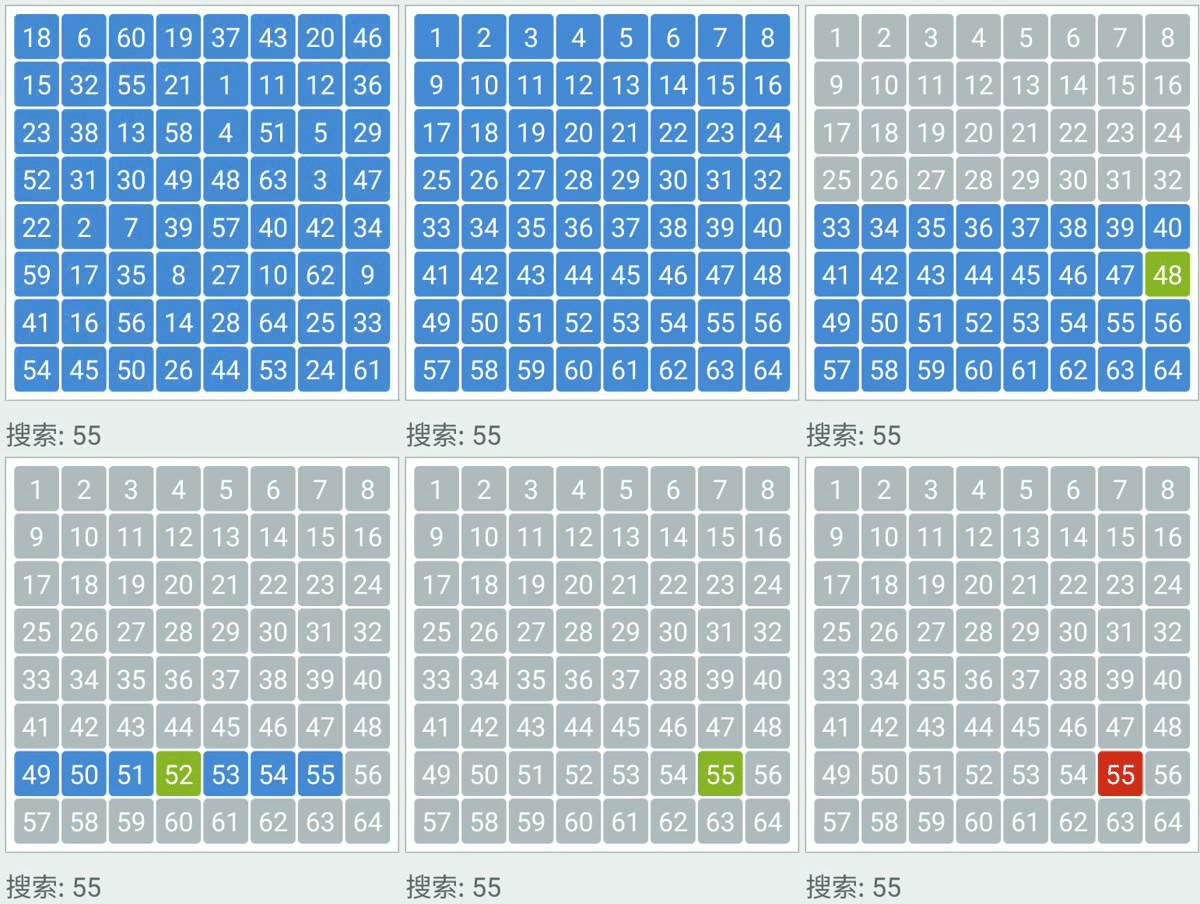
二分查找
- 时间复杂度:O(log2n)
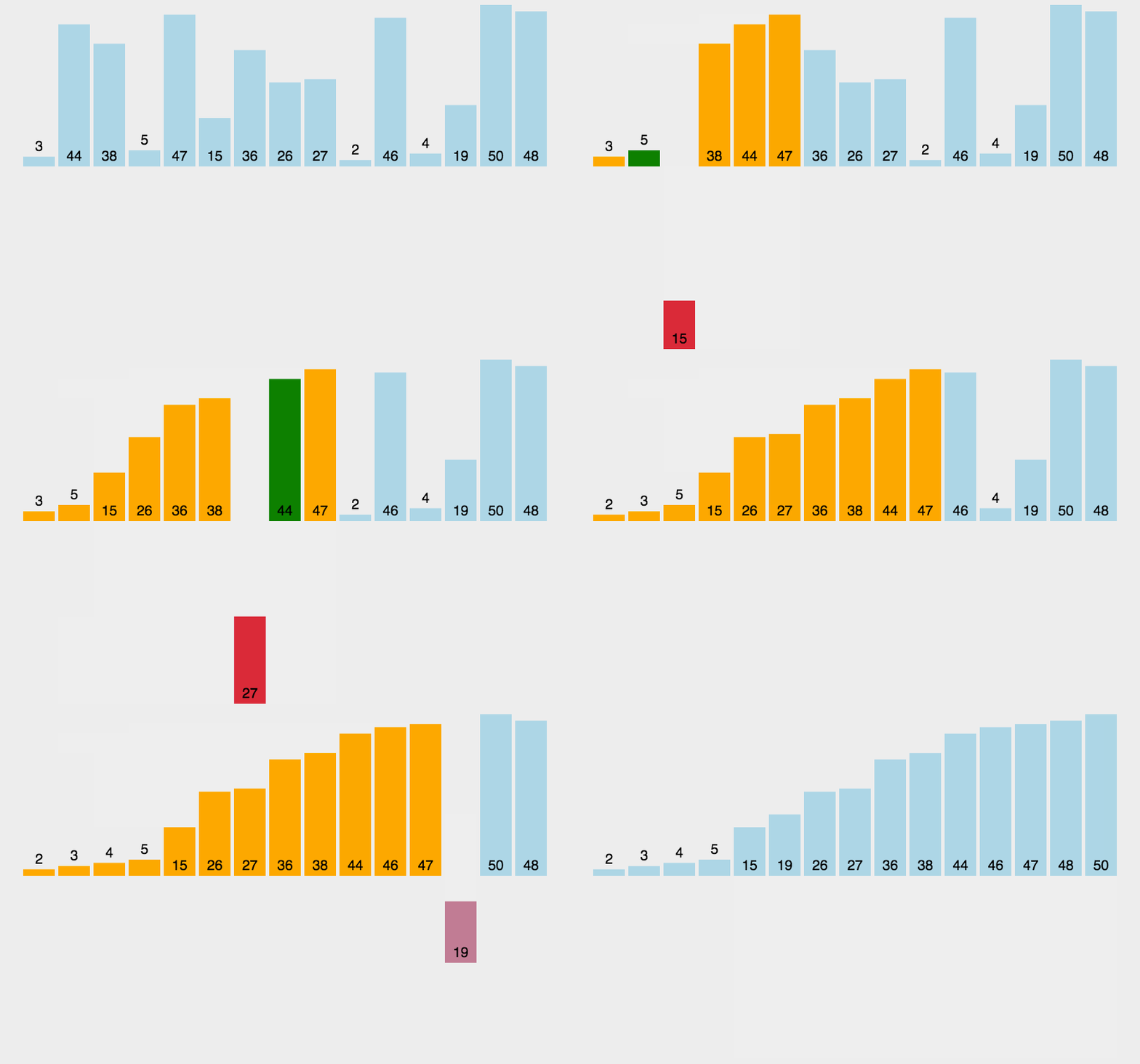
二叉查找树(BST)
- 时间复杂度:
- 查找:平均时间复杂度为 O(log N),最坏情况下为 O(N)(当树退化为链表时)。
- 插入:平均时间复杂度为 O(log N),最坏情况下为 O(N)。
- 删除:平均时间复杂度为 O(log N),最坏情况下为 O(N)


红黑树
- 时间复杂度:
- 查找:平均时间复杂度为 O(log N)
- 插入:平均时间复杂度为 O(log N)
- 删除:平均时间复杂度为 O(log N)
排序
选择排序
/**
 * 选择排序:第i个元素和剩余元素比较选出最小的
 * 时间复杂度:上下界 n^2,N^2/2次比较,N次交换,幂函数增长
 * 空间复杂度:原地排序算法
 */
public class Selection {

    /**
     * 排序
     * @param a
     */
    public static void sort(Comparable[] a) {
        int N = a.length;
        for (int i = 0; i < N; i++) {
            int min = i;
            for (int j = i+1; j < N; j++) {
                if (less(a[j], a[min])) {
                    min = j;
                }
            }
            exch(a, i, min);
        }
    }

    /**
     * 判断大小
     * @param v
     * @param w
     * @return
     */
    private static boolean less(Comparable v, Comparable w) {
        return v.compareTo(w) < 0;
    }

    /**
     * 交换元素
     * @param a
     * @param i
     * @param j
     */
    private static void exch(Comparable[] a, int i, int j) {
        Comparable t = a[i];
        a[i] = a[j];
        a[j] = t;
    }

    /**
     * 打印数组
     * @param a
     */
    private static void show(Comparable[] a) {
        for (int i = 0; i < a.length; i++) {
            StdOut.print(a[i] + " ");
        }
        StdOut.println();
    }

    /**
     * 测试数组是否有顺序
     * @param a
     * @return
     */
    private static boolean isSorted(Comparable[] a) {
        for (int i = 1; i < a.length; i++) {
            if (less(a[i], a[i-1])) {
                return false;
            }
        }
        return true;
    }

    public static void main(String[] args) {
        String filePath = System.getProperty("user.dir") + "/src/txt/" + "Example.txt";
        String[] a = In.readStrings(filePath);
        sort(a);
        StdOut.println("是否排序:" + isSorted(a));
        show(a);
    }

}
插入排序
/**
 * 插入排序:依次判相邻的元素中最小的
 * 时间复杂度: 上下界 n^2,平均N^2/4次比较,N^2/4次交换,最坏N^2/2 次比较,N^2/2次交换,最好N-1次比较,0次交换
 * 空间复杂度:原地排序算法
 * 说明:和集合的初始状态关联性较大
 */
public class Insertion {

    /**
     * 排序
     * @param a
     */
    public static void sort(Comparable[] a) {
        int N = a.length;
        for (int i = 1; i < N; i++) {
            for (int j = i; j >0 && less(a[j], a[j -1]); j--) {
                exch(a, j, j-1);
            }
        }
    }

    /**
     * 判断大小
     * @param v
     * @param w
     * @return
     */
    private static boolean less(Comparable v, Comparable w) {
        return v.compareTo(w) < 0;
    }

    /**
     * 交换元素
     * @param a
     * @param i
     * @param j
     */
    private static void exch(Comparable[] a, int i, int j) {
        Comparable t = a[i];
        a[i] = a[j];
        a[j] = t;
    }

    /**
     * 打印数组
     * @param a
     */
    private static void show(Comparable[] a) {
        for (int i = 0; i < a.length; i++) {
            StdOut.print(a[i] + " ");
        }
        StdOut.println();
    }

    /**
     * 测试数组是否有顺序
     * @param a
     * @return
     */
    private static boolean isSorted(Comparable[] a) {
        for (int i = 1; i < a.length; i++) {
            if (less(a[i], a[i-1])) {
                return false;
            }
        }
        return true;
    }

    public static void main(String[] args) {
        String filePath = System.getProperty("user.dir") + "/src/txt/" + "Example.txt";
        String[] a = In.readStrings(filePath);
        sort(a);
        StdOut.println("是否排序:" + isSorted(a));
        show(a);
    }

}
希尔排序
/**
 * 希尔排序:缩小增量的插入排序
 * 时间复杂度:上界 n^(3/2)、下界 n*log2n
 * 空间复杂度:原地排序算法
 * 说明:在插入排序基础上新增增幅h的概念,大幅提高效率
 */
public class Shell {

    /**
     * 排序
     * @param a
     */
    public static void sort(Comparable[] a) {
        int N = a.length;
        int h = 1;
        while (h < N/3) {
            h = 3*h + 1;
        }
        while (h >= 1) {
            for (int i = h; i < N; i++) {
                for (int j = i; j >= h && less(a[j], a[j-h]); j -= h) {
                    exch(a, j, j-h);
                }
            }
            h = h/3;
        }
    }

    /**
     * 判断大小
     * @param v
     * @param w
     * @return
     */
    private static boolean less(Comparable v, Comparable w) {
        return v.compareTo(w) < 0;
    }

    /**
     * 交换元素
     * @param a
     * @param i
     * @param j
     */
    private static void exch(Comparable[] a, int i, int j) {
        Comparable t = a[i];
        a[i] = a[j];
        a[j] = t;
    }

    /**
     * 打印数组
     * @param a
     */
    private static void show(Comparable[] a) {
        for (int i = 0; i < a.length; i++) {
            StdOut.print(a[i] + " ");
        }
        StdOut.println();
    }

    /**
     * 测试数组是否有顺序
     * @param a
     * @return
     */
    private static boolean isSorted(Comparable[] a) {
        for (int i = 1; i < a.length; i++) {
            if (less(a[i], a[i-1])) {
                return false;
            }
        }
        return true;
    }

    public static void main(String[] args) {
        String filePath = System.getProperty("user.dir") + "/src/txt/" + "Example.txt";
        String[] a = In.readStrings(filePath);
        sort(a);
        StdOut.println("是否排序:" + isSorted(a));
        show(a);
    }

}
并归排序
/**
 * 并归排序
 * 时间复杂度:NlogN
 * 空间复杂度:N
 * 说明:
 */
public class Merge {

    private static Comparable[] aux; // 辅助数组

    /**
     * 原地并归:将a[lo..mid] 和 a[mid+1..hi] 归并
     * @param a
     * @param lo
     * @param mid
     * @param hi
     */
    private static void merge(Comparable[] a, int lo, int mid, int hi) {
        int i = lo;
        int j = mid + 1;
        for (int k = lo; k <= hi; k++) {
            aux[k] = a[k];
        }
        for (int k = lo; k <= hi; k++) {
            if (i > mid) {
                a[k] = aux[j++];
            } else if (j > hi) {
                a[k] = aux[i++];
            } else if (less(aux[j], aux[i])) {
                a[k] = aux[j++];
            } else {
                a[k] = aux[i++];
            }
        }
    }

    /**
     * 自上向下的并归排序
     * @param a
     * @param lo
     * @param hi
     */
    private static void sort(Comparable[] a, int lo, int hi) {
        if (hi <= lo) {
            return;
        }
        int mid = lo + (hi - lo) / 2;
        sort(a, lo, mid);
        sort(a, mid+1, hi);
        merge(a, lo, mid, hi);
    }

    /**
     * 排序
     * @param a
     */
    public static void sort(Comparable[] a) {
        aux = new Comparable[a.length];
        sort(a, 0, a.length - 1);
    }

    /**
     * 判断大小
     * @param v
     * @param w
     * @return
     */
    private static boolean less(Comparable v, Comparable w) {
        return v.compareTo(w) < 0;
    }

    /**
     * 交换元素
     * @param a
     * @param i
     * @param j
     */
    private static void exch(Comparable[] a, int i, int j) {
        Comparable t = a[i];
        a[i] = a[j];
        a[j] = t;
    }

    /**
     * 打印数组
     * @param a
     */
    private static void show(Comparable[] a) {
        for (int i = 0; i < a.length; i++) {
            StdOut.print(a[i] + " ");
        }
        StdOut.println();
    }

    /**
     * 测试数组是否有顺序
     * @param a
     * @return
     */
    private static boolean isSorted(Comparable[] a) {
        for (int i = 1; i < a.length; i++) {
            if (less(a[i], a[i-1])) {
                return false;
            }
        }
        return true;
    }

    public static void main(String[] args) {
        String filePath = System.getProperty("user.dir") + "/src/txt/" + "Example.txt";
        String[] a = In.readStrings(filePath);
        sort(a);
        StdOut.println("是否排序:" + isSorted(a));
        show(a);
    }

}
快速排序
/**
 * 快速排序
 * 时间复杂度:NlogN
 * 空间复杂度:原地排序
 * 说明:循环(按第一个元素切分,左侧是小的,右侧是大的),当两个指针相等时,排序完成。
 */
public class Quick {

    /**
     * 切分
     * @param a
     * @param lo
     * @param hi
     * @return
     */
    private static int partition(Comparable[] a, int lo, int hi) {
        int i = lo, j = hi + 1;
        Comparable v = a[lo];
        while (true) {
            while (less(a[++i], v)) { // 比v小的数不做处理
                if (i == hi) {
                    break;
                }
            }
            while (less(v, a[--j])) { // 比v大的数不做处理
                if (j == lo) {
                    break;
                }
            }
            if (i >= j) { // 索引 i >= j,切分完成
                break;
            }
            exch(a, i, j);
        }
        exch(a, lo, j);
        return j;
    }

    /**
     * 快速排序
     */
    private static void sort(Comparable[] a, int lo, int hi) {
        if (hi <= lo) {
            return;
        }
        int j = partition(a, lo, hi);
        sort(a, lo, j-1);
        sort(a, j+1, hi);
    }

    /**
     * 排序
     * @param a
     */
    public static void sort(Comparable[] a) {
        StdRandom.shuffle(a);
        sort(a, 0, a.length - 1);
    }

    /**
     * 判断大小
     * @param v
     * @param w
     * @return
     */
    private static boolean less(Comparable v, Comparable w) {
        return v.compareTo(w) < 0;
    }

    /**
     * 交换元素
     * @param a
     * @param i
     * @param j
     */
    private static void exch(Comparable[] a, int i, int j) {
        Comparable t = a[i];
        a[i] = a[j];
        a[j] = t;
    }

    /**
     * 打印数组
     * @param a
     */
    private static void show(Comparable[] a) {
        for (int i = 0; i < a.length; i++) {
            StdOut.print(a[i] + " ");
        }
        StdOut.println();
    }

    /**
     * 测试数组是否有顺序
     * @param a
     * @return
     */
    private static boolean isSorted(Comparable[] a) {
        for (int i = 1; i < a.length; i++) {
            if (less(a[i], a[i-1])) {
                return false;
            }
        }
        return true;
    }

    public static void main(String[] args) {
        String filePath = System.getProperty("user.dir") + "/src/txt/" + "Example.txt";
        String[] a = In.readStrings(filePath);
        sort(a);
        StdOut.println("是否排序:" + isSorted(a));
        show(a);
    }

}
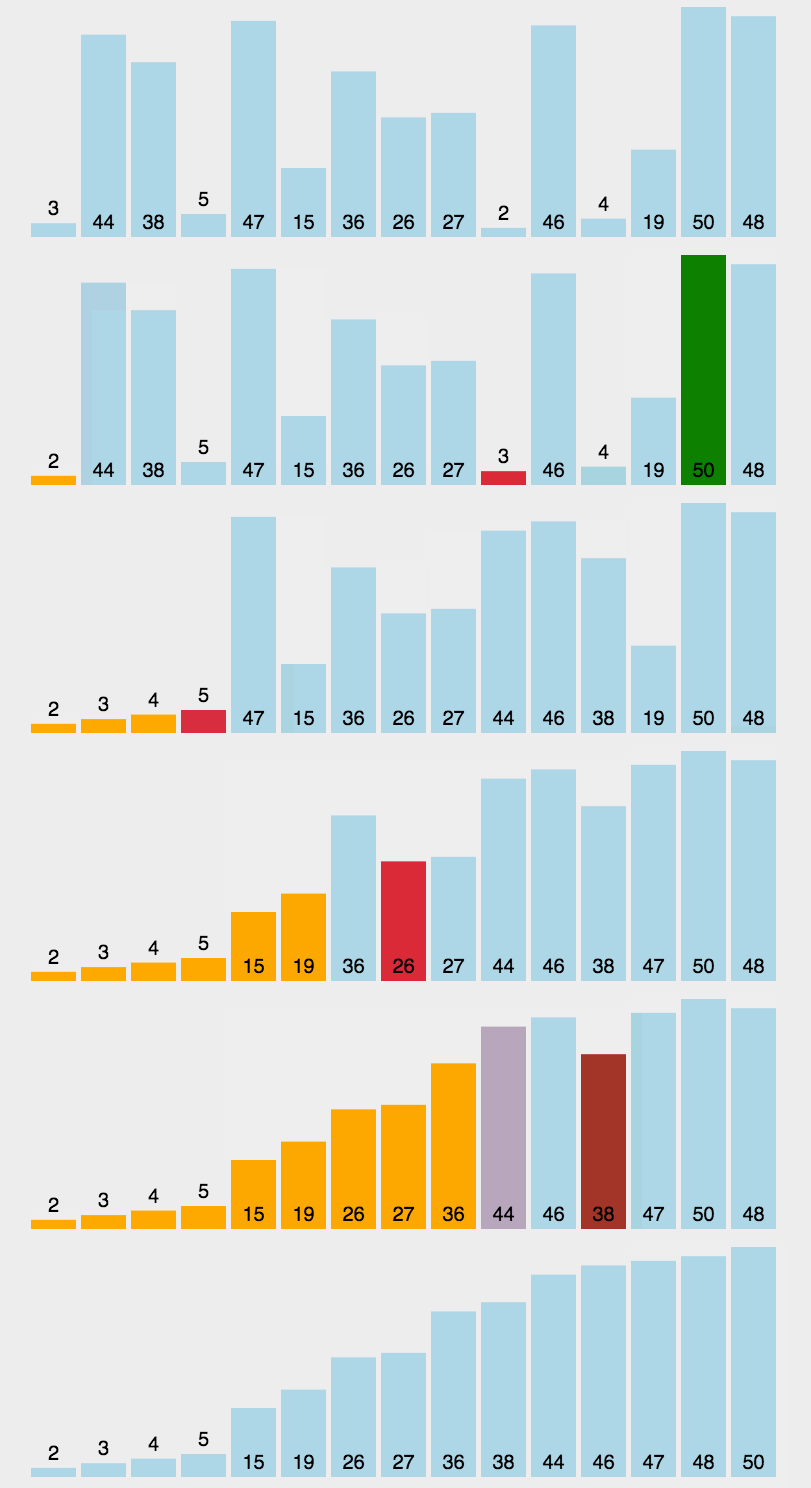
选择排序
- 时间复杂度:O(n^2)
- 空间复杂度:O(1)
- 稳定性:不稳定
插入排序
- 时间复杂度:最坏 O(n2)、平均O(n2)、最好 O(n)
- 空间复杂度:O(1)
- 稳定性:不稳定
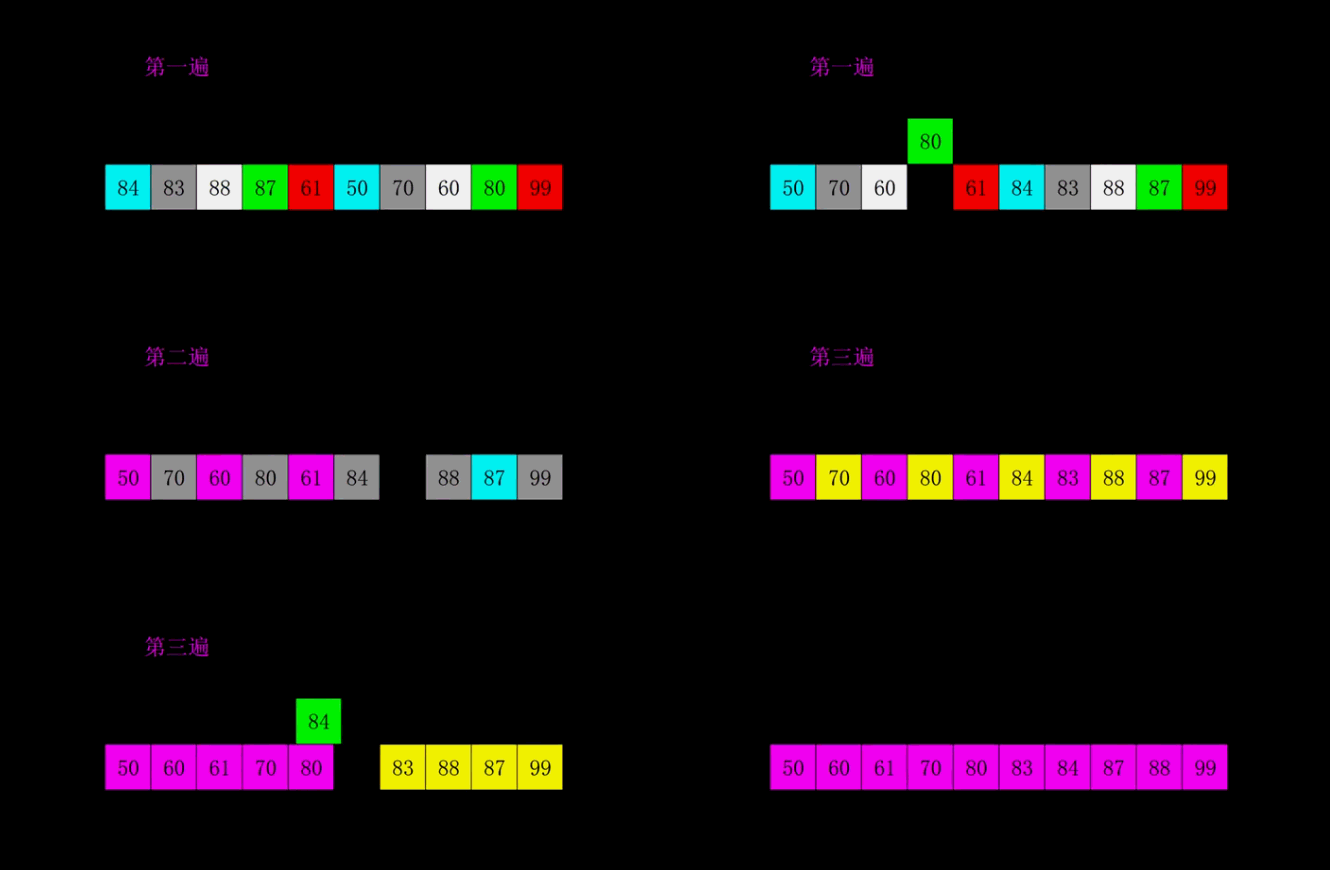
希尔排序
- 时间复杂度:最坏 O(n1.3)、平均O(n2)、最好 O(n)
- 空间复杂度:O(1)
- 稳定性:不稳定
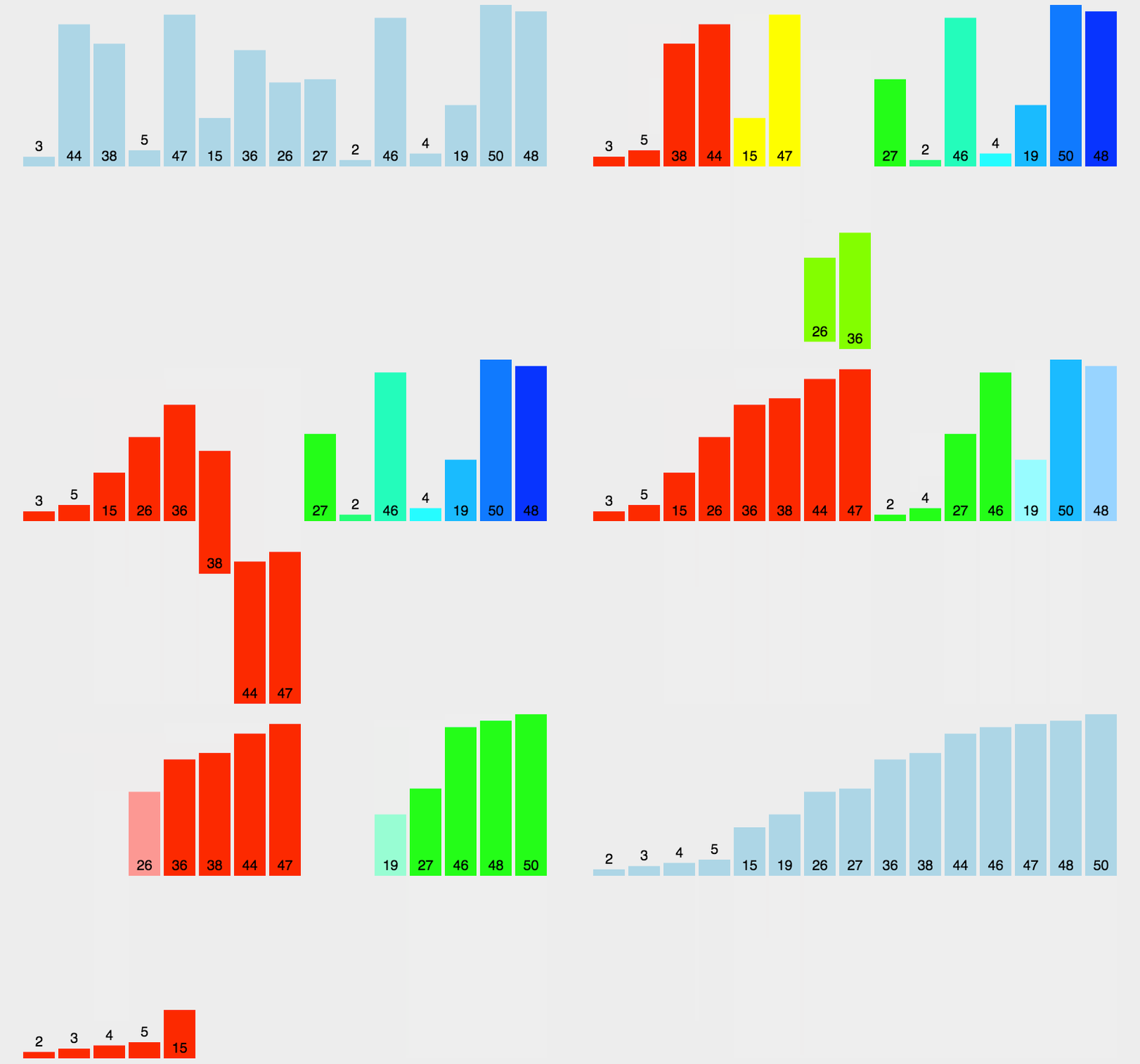
并归排序
- 时间复杂度:最坏 O(nlogn)、平均O(nlogn)、最好 O(nlogn)
- 空间复杂度:O(n)
- 稳定性:稳定
快速排序
- 时间复杂度:最坏 O(n^2)、平均O(nlogn)、最好 O(nlogn)
- 空间复杂度:O(nlogn)
- 稳定性:不稳定